
Quick Summary (Featured Snippet)
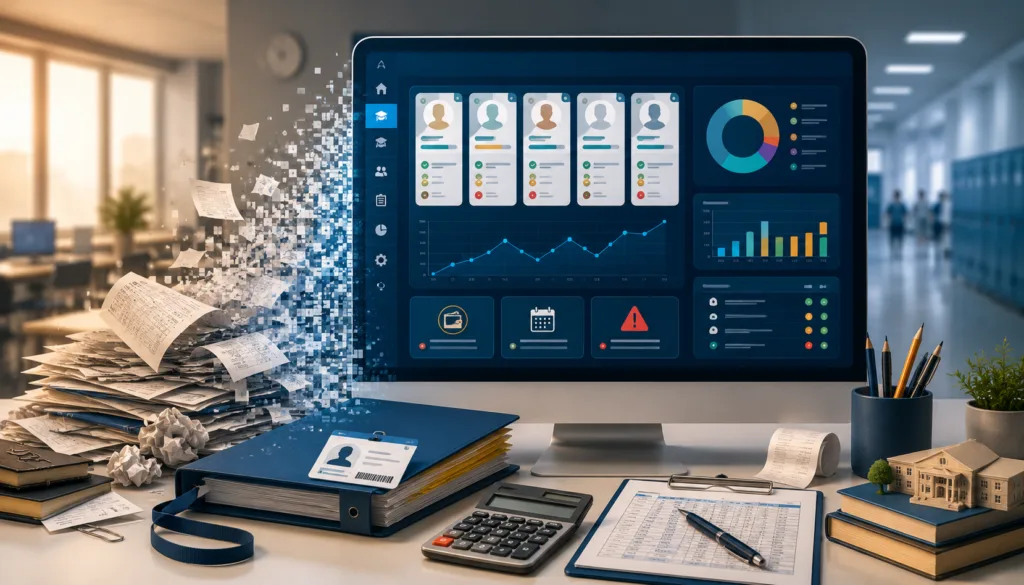
The best ERP system is the one that unifies financial, operational, and administrative processes into a single integrated platform, delivers real-time visibility across the organization, supports informed decision-making, and scales with business growth while meeting local compliance requirements. The right ERP is not defined by popularity, but by fit, adaptability, and depth of integration.
Introduction: Why ERP Has Become the Backbone of Modern Enterprises
In today’s fast-paced and highly regulated business environment, relying on disconnected systems, spreadsheets, and manual processes is no longer sustainable. Organizations that aim for sustainable growth require a central nervous system that governs resources, aligns operations, and transforms data into strategic insight. This is where ERP (Enterprise Resource Planning) becomes a strategic pillar not merely a software tool.
What Is an ERP System?
An ERP system is an integrated software platform designed to plan and manage enterprise resources by connecting finance, procurement, inventory, sales, HR, operations, and reporting within a unified database and standardized workflows.
How ERP Differs from Standalone Systems
A single source of truth instead of fragmented data
End-to-end process visibility rather than departmental silos
Real-time reporting instead of delayed manual consolidation
Built-in governance and controls rather than operational risk
Why Companies Search for “The Best ERP System”
Searching for “the best” does not mean choosing the most famous brand. It means identifying the system that truly fits the organization’s operational reality. Companies adopt ERP to:
Reduce operational inefficiencies and errors
Improve productivity and transparency
Ensure regulatory and tax compliance
Gain holistic performance visibility
Enable scalable growth
Types of ERP Systems
1. On-Premise ERP
Full control over infrastructure
Suitable for specific security requirements
Higher upfront and maintenance costs
2. Cloud ERP
Accessible anytime, anywhere
Automatic updates and scalability
Lower operational overhead
Ideal for modern and growing businesses
3. Hybrid ERP
Combines on-premise and cloud deployment
Enables phased digital transformation
Core Characteristics of the Best ERP System
1. True Integration
A top ERP system does not simply connect modules it unifies financial logic and operational workflows from purchase to payment and from order to cash.
2. Flexibility and Customization
Every organization is unique. The best ERP adapts to policies and procedures without compromising system integrity.
3. Scalability
Growth should never break the system. A strong ERP scales across users, branches, and functional modules.
4. Reporting and Analytics
Real-time financial and operational reports, dashboards, and performance indicators enable proactive management.
5. Security and Governance
Granular permissions, audit trails, access controls, and data protection are essential.
6. Local Compliance Readiness
Especially in markets such as Saudi Arabia and Jordan VAT, e-invoicing, and regulatory reporting are non-negotiable.
Core ERP Modules
Financial Management
General Ledger
Accounts Receivable and Payable
Cash and Bank Management
Fixed Assets
Cost Centers
Financial Statements
Procurement and Inventory
Purchase Requests
Purchase Orders
Goods Receipt
Inventory Tracking
Costing and Valuation
Sales Management
Quotations
Sales Orders
Invoicing
Returns
Advanced Pricing
Human Resources
Employee Records
Payroll
Attendance
Leave Management
Reporting and Dashboards
Management Reports
KPIs
Analytical Insights
How to Choose the Best ERP System for Your Business
Step 1: Assess Your Current State
Company size
Number of users
Operational complexity
Regulatory requirements
Step 2: Define Strategic Objectives
Cost reduction
Operational speed
Control and governance
Expansion readiness
Step 3: Evaluate Organizational Readiness
User training capacity
Change management approach
Executive sponsorship
Step 4: Conduct Practical Evaluation
Real-life demos
Business scenarios
Financial and operational reporting tests
Common Mistakes When Selecting an ERP System
Choosing the most popular system instead of the most suitable
Ignoring local compliance requirements
Underestimating training needs
Poor change management planning
Excessive customization without governance
ERP in Saudi Arabia: Market-Specific Requirements
The Saudi market has distinct regulatory and operational needs:
VAT compliance
Electronic invoicing mandates
Integration with government platforms
Standardized regulatory reporting
The best ERP system in this context must be locally enabled, not globally adapted through superficial add-ons.
Why ERP Is a Strategic Success Factor
ERP is not just accounting software. It is:
A governance framework
A decision-making platform
A digital backbone
A competitive advantage
Organizations that implement ERP correctly shift from reactive management to proactive leadership.
ERP and Digital Transformation
Process automation
Reduced human dependency
Unified data architecture
Advanced analytics readiness
Future-proof digital infrastructure
Is ERP Suitable for Small and Medium Enterprises?
Yes—when implemented correctly:
Modular deployment
Phased implementation
Controlled cost structure
Strong local support
Many mid-sized companies fail not because they adopted ERP early, but because they adopted it too late.
Integration with Other Systems
The best ERP system seamlessly integrates with:
POS systems
E-commerce platforms
Banking systems
Government portals
Smooth integration minimizes errors and maximizes efficiency.
User Experience (UX) Matters
Ease of use is not optional:
Reduces resistance to change
Improves productivity
Minimizes data entry errors
A technically powerful ERP that is hard to use often fails operationally.
Post-Implementation Support: A Critical Factor
Local support teams
Fast response times
Regulatory expertise
Continuous enhancements
A great ERP without strong support is a long-term risk.
Why Companies Prefer ERP Solutions Built with Local Expertise
Local expertise:
Understands regulations
Aligns with operational culture
Reduces implementation risk
Increases success rates
This is why organizations increasingly choose ERP solutions developed with deep regional insight, such as enterprise platforms offered by specialized providers like Mozon Technologies.
Frequently Asked Questions (FAQ)
What is the best ERP system?
The best ERP system is the one that fits your business size, supports compliance, scales with growth, and provides real-time insights.
Is ERP expensive?
Costs vary based on deployment and scope, but operational ROI typically exceeds the investment.
How long does ERP implementation take?
From several weeks to several months depending on complexity and readiness.
Can ERP be customized?
Yes—smart customization preserves system stability while meeting business needs.
Is ERP industry-specific?
ERP systems can be configured for different industries through modular design.
Conclusion: ERP Is a Management Decision Before a Technology Choice
Choosing the best ERP system is a strategic decision that defines your organization’s ability to grow, control, and comply. The right ERP does not just change tools it transforms how business is run.
When ERP is built on deep operational understanding and supported by regional expertise, it becomes a true growth partner, not just another software system.