
Introduction
In the modern business world, companies need advanced systems to manage financial, administrative, and operational processes in a unified way. Traditional solutions are no longer sufficient to meet the requirements of speed, scalability, and integration across departments. This is where the Smart Business Platform emerges as a comprehensive solution for managing enterprises in a fully digital environment.
A smart business platform helps organizations improve operational efficiency, reduce costs, enhance governance, and make informed decisions based on accurate and real-time data.
What Is a Smart Business Platform?
A Smart Business Platform is an integrated digital system that brings together financial management, human resources, inventory, sales, projects, and reporting in a single unified platform, whether cloud-based or on-premise.
The main objectives are:
Unifying all company operations into one system
Improving control and management
Accelerating processes and reducing errors
Supporting business growth and scalability
How Does a Smart Business Platform Work?
The platform integrates all company departments into a centralized database, where every transaction is recorded in real time and presented through advanced dashboards and reports.
The workflow typically includes:
Data input from all departments
Processing financial and administrative operations
Generating reports and analytics
Integration with external systems such as POS, banks, and third-party applications
Core Components of a Smart Business Platform
1. Financial Management and Accounting
This module includes all financial operations, such as:
General ledger
Journal entries
Accounts payable and receivable
Budgets and financial statements
Fixed asset management
2. Human Resources Management
Manages all employee-related processes, including:
Employee profiles
Payroll and benefits
Attendance and leave management
Contracts and organizational structure
3. Inventory and Supply Chain Management
Includes:
Warehouse management
Purchase orders
Stock movement
Inventory counting
Logistics planning
4. Sales and Customer Management
Includes:
Customer management
Sales orders
Invoicing
Collections
Customer relationship management (CRM)
5. Project and Operations Management
Includes:
Project tracking
Resource allocation
Operational cost management
Performance reports
6. Reporting and Dashboards
Includes:
Key performance indicators (KPIs)
Financial and administrative reports
Operational analytics
Custom executive dashboards
Benefits of a Smart Business Platform
Cost Reduction
A unified platform reduces dependency on multiple systems and minimizes human errors.
Improved Productivity
Speeds up daily operations and reduces manual tasks.
Unified Management Visibility
Provides management with a comprehensive view of all company operations.
Scalability and Growth
Easily supports multi-branch, multi-company, and user expansion.
Enhanced Governance and Control
Offers role-based permissions and detailed audit trails.
Smart Business Platform vs Traditional Systems
| Feature | Smart Business Platform | Traditional Systems |
|---|---|---|
| Integration | Fully integrated | Limited |
| Reporting | Real-time & advanced | Static reports |
| Scalability | Easy and flexible | Complex |
| Management | Centralized | Distributed |
| Long-term Cost | Lower | Higher |
Industry Use Cases for Smart Business Platforms
Manufacturing
Production planning
Cost management
Quality monitoring
Retail and Trading
Inventory management
Sales analytics
Supplier management
Real Estate
Property management
Rent collection
Investment reporting
Education
Tuition and fee management
Financial operations
Administrative reporting
Services
Customer management
Project tracking
Operational cost management
Cloud vs On-Premise Smart Business Platforms
Cloud-Based Platform
Accessible from anywhere
Lower initial cost
Automatic updates
Ideal for small and medium businesses
On-Premise Platform
Full infrastructure control
Advanced customization
Suitable for large enterprises
How to Choose a Smart Business Platform
Key Selection Criteria:
Ease of use
Arabic language support
Scalability
Integration capabilities
Security and role-based access
Reliable technical support
Advanced reporting features
Role of Smart Business Platforms in Digital Transformation
A smart business platform is the backbone of digital transformation, helping organizations:
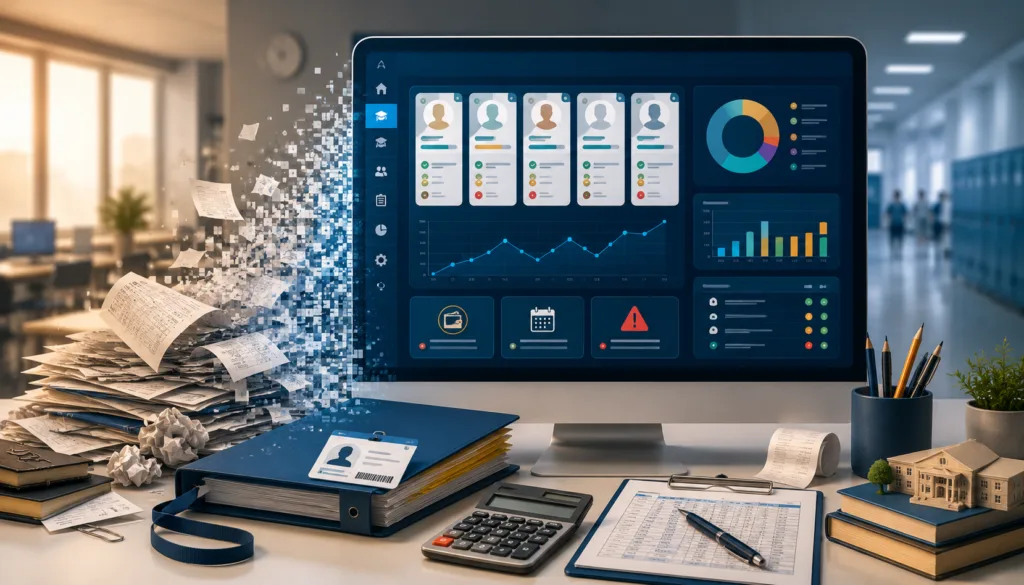
Digitize paper-based processes
Increase operational speed
Reduce manual dependency
Improve transparency and governance
The Future of Smart Business Platforms
Smart business platforms are expected to evolve with:
Unified enterprise platforms for all industries
Advanced analytics and reporting
Broader integration with government and financial systems
More intuitive user interfaces
Greater customization for enterprises
Frequently Asked Questions (FAQ)
What is a Smart Business Platform?
A smart business platform is an integrated digital system that manages financial, administrative, and operational processes in a single platform.
Is a Smart Business Platform suitable for small businesses?
Yes, especially cloud-based platforms, which offer low cost and scalability.
What is the difference between a Smart Business Platform and ERP?
ERP focuses on operational management, while a smart business platform includes ERP plus advanced reporting, management tools, and broad integration capabilities.
Is a Smart Business Platform secure?
Yes, it provides encryption, role-based access control, and advanced security measures.
Conclusion
A Smart Business Platform is one of the most important digital solutions for modern enterprises. It provides a unified system to manage financial, administrative, and operational processes, helping organizations improve performance, reduce costs, and achieve sustainable growth.