
Introduction
In today’s rapidly evolving business environment, companies can no longer rely on traditional operational methods to manage their daily activities. Competition is stronger, markets are more complex, and customers expect faster and more reliable services. As a result, improving business operational processes has become a critical factor that determines whether an organization can grow and remain competitive.
Operational processes include all the daily activities that enable a company to deliver products or services to its customers. These processes cover areas such as sales management, inventory control, financial operations, human resources, procurement, and customer service.
When these processes are inefficient or disconnected, companies often face problems such as increased costs, slow performance, poor communication between departments, and frequent operational errors.
For this reason, modern organizations are focusing on optimizing operational processes by implementing digital systems, automating workflows, and using data analytics to improve decision-making.
This article explores the concept of improving operational processes, its importance for businesses, practical strategies for implementation, and the role of modern enterprise technologies in achieving operational excellence.
What Are Business Operational Processes?
Operational processes refer to the set of structured activities that companies perform to run their daily operations and deliver value to customers.
These processes form the backbone of any organization and ensure that business functions operate efficiently.
Examples of operational processes include:
Sales management
Procurement and purchasing
Inventory management
Financial and accounting operations
Human resource management
Customer service
Project management
Supply chain operations
When these processes are well-structured and properly integrated, businesses can operate more efficiently and achieve their goals more effectively.
Why Improving Operational Processes Is Important for Businesses
Organizations that focus on improving their operational processes gain several strategic advantages that directly impact their performance and competitiveness.
Increasing Operational Efficiency
Optimizing processes allows companies to complete tasks faster while using fewer resources, which significantly improves overall productivity.
Reducing Operational Costs
When processes are streamlined and automated, companies can reduce unnecessary expenses caused by delays, inefficiencies, and operational errors.
Enhancing Service Quality
Efficient processes help ensure higher quality standards and improve the consistency of services and products delivered to customers.
Faster Decision-Making
Well-organized processes provide management with accurate and timely information, allowing leaders to make strategic decisions more quickly.
Supporting Business Growth
Companies with optimized operational processes are better prepared to scale their operations, open new branches, and expand into new markets.
Challenges Companies Face in Managing Operational Processes
Despite their importance, many organizations struggle to manage operational processes effectively.
Disconnected Systems
Many companies rely on multiple software systems that do not communicate with each other, leading to duplicated data and fragmented information.
Manual Procedures
Manual workflows slow down operations and increase the likelihood of human errors.
Lack of Communication Between Departments
When departments operate independently without integrated systems, collaboration becomes difficult and inefficient.
Limited Access to Data
Without proper data visibility and reporting tools, it becomes difficult for organizations to evaluate performance and identify areas for improvement.
Strategies for Improving Operational Processes
Companies can adopt several practical strategies to improve their operational performance.
Analyze Current Processes
The first step is to review existing workflows and identify inefficiencies, delays, and operational bottlenecks.
Simplify Workflows
Reducing unnecessary steps in business processes helps streamline operations and improve productivity.
Automate Business Processes
Automation allows companies to perform repetitive tasks automatically, reducing manual work and minimizing errors.
Integrate Business Systems
Using a unified platform that connects various departments helps ensure better communication and data consistency.
Utilize Data Analytics
Data-driven insights help organizations identify improvement opportunities and optimize performance.
The Role of Technology in Improving Operational Processes
Technology plays a crucial role in transforming how businesses manage their operations.
Modern digital solutions enable organizations to streamline processes, automate tasks, and gain valuable insights into operational performance.
Key technologies that support operational optimization include:
Enterprise Resource Planning (ERP) Systems
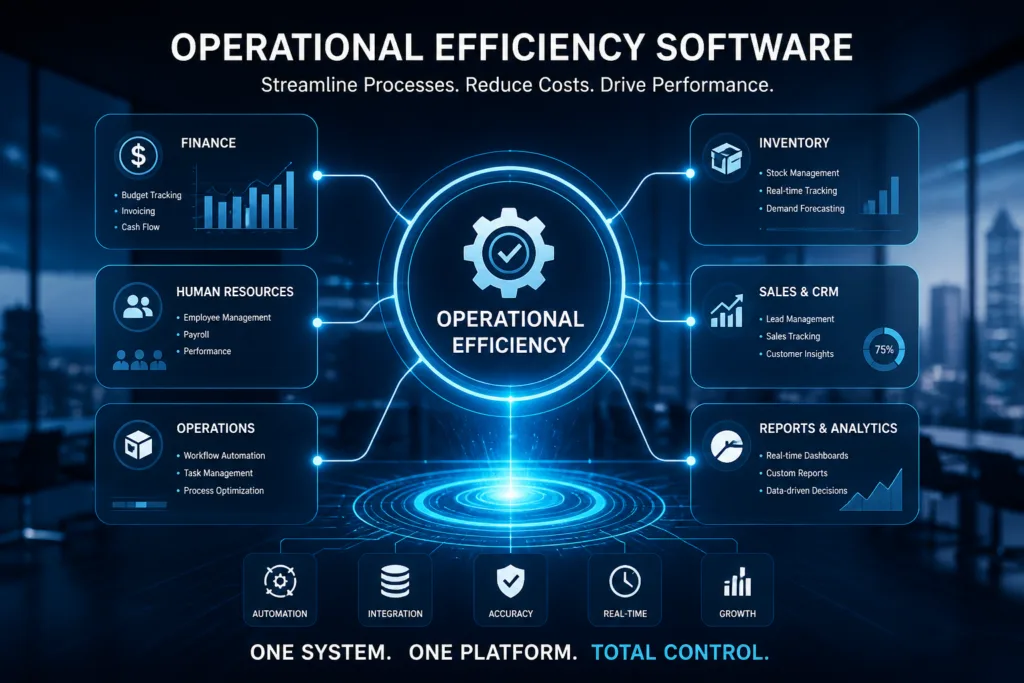
ERP platforms provide a centralized system that integrates financial management, inventory control, sales operations, and human resources.
Workflow Automation
Automation tools help eliminate repetitive manual tasks such as invoicing, order processing, and inventory updates.
Data Analytics and Business Intelligence
Advanced analytics tools help organizations monitor performance, detect inefficiencies, and make better strategic decisions.
Cloud Computing
Cloud-based systems allow businesses to manage operations remotely and scale their infrastructure as they grow.
Practical Steps to Implement Operational Process Improvement
Organizations that want to enhance their operational processes should follow a structured approach.
Evaluate existing operational workflows.
Identify inefficiencies and process bottlenecks.
Develop a clear improvement strategy.
Implement modern enterprise technology solutions.
Train employees on new systems and processes.
Continuously monitor performance and optimize operations.
The Importance of Integrated Enterprise Systems
Integrated enterprise systems play a critical role in improving operational efficiency by connecting all departments within a unified platform.
For example, when a sales transaction is recorded in an integrated system, the platform can automatically:
Update inventory levels
Record financial transactions
Generate performance reports
Provide insights for business analytics
This level of integration significantly reduces operational complexity and improves coordination across the organization.
Businesses seeking to improve their operational performance can benefit from advanced enterprise platforms such as
https://mozon-tech.com/en/mozon-resource-planning/
which provide a comprehensive solution for managing business operations within a single integrated system.
The Future of Operational Process Optimization
As technology continues to evolve, operational process optimization will increasingly rely on advanced innovations such as:
Artificial Intelligence
Predictive Analytics
Intelligent Automation
Cloud-based enterprise systems
These technologies will allow businesses to manage their operations more intelligently and adapt quickly to changing market conditions.
Organizations that invest in improving their operational processes today will be better positioned to compete and thrive in the digital economy.
Conclusion
Improving operational processes is no longer just an internal management initiative—it has become a strategic priority for organizations aiming to achieve efficiency, scalability, and long-term success.
By streamlining workflows, integrating systems, and leveraging modern enterprise technologies, companies can significantly enhance productivity, reduce operational costs, and deliver better services to their customers.
Businesses that focus on operational excellence today will be the ones that lead their industries tomorrow.