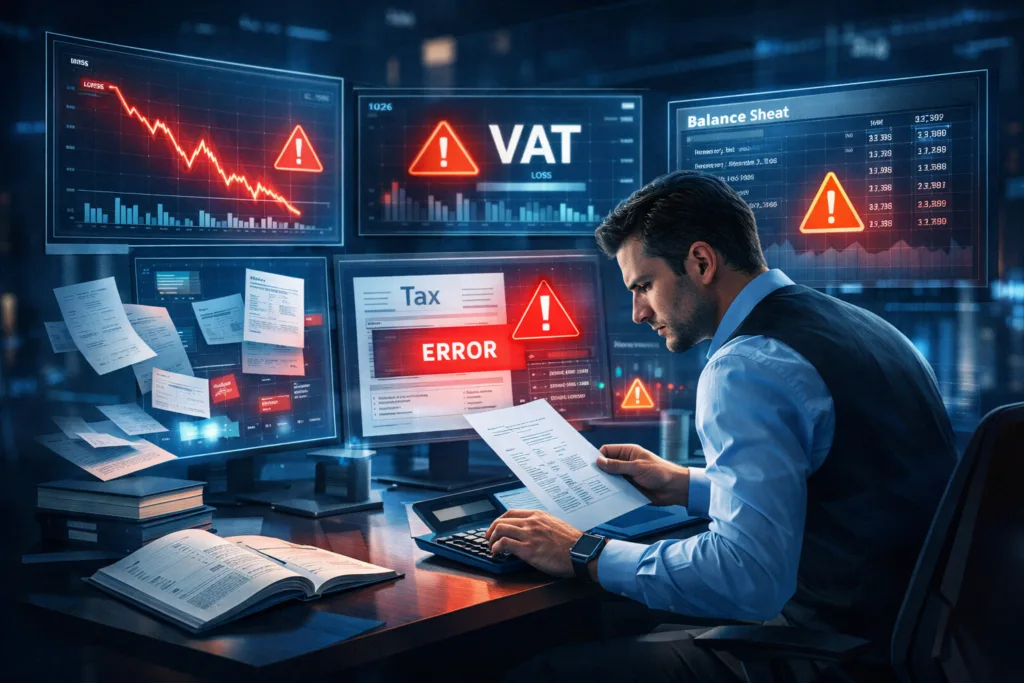

Introduction: Where Do Company Profits Really Disappear?
Most business owners focus on one question:
How much did we sell this month?
But the more important question is often:
How much did we spend?
In reality, many companies do not lose money because of weak sales —
they lose money because of uncontrolled expenses and silent financial leakage.
Unmonitored operational costs
Random purchasing decisions
Duplicate invoices
Expenses without approval
Untracked petty cash
Spending without analysis
At the end of the month, the surprise appears:
Sales are good… but profits are low.
This is where expense management becomes critical.
It is not just about recording invoices.
It is a complete financial control system.
What Is Expense Management?
Expense management is:
The process of planning, recording, monitoring, analyzing, and controlling every amount of money that leaves the company.
Simply put:
Where did the money go?
Why was it spent?
Was it necessary?
If you cannot answer these questions immediately, you are not managing expenses you are reacting to them after the damage is done.
Why Is Expense Management Critical for Business Success?
Because it directly impacts:
1. Profitability
Every dollar saved is pure profit.
2. Cash Flow
Excessive spending creates liquidity pressure.
3. Growth Potential
Controlled costs free up capital for investment.
4. Financial Stability
Better monitoring means fewer surprises.
A Simple Example That Changes Everything
Company revenue: 1,000,000
Expenses: 950,000
Profit: 50,000
Reduce expenses by only 5%:
950,000 × 5% = 47,500 savings
New profit = 97,500
Profit nearly doubled… without selling anything extra.
This is why:
Cost control can sometimes be more powerful than increasing sales.
Types of Business Expenses
Understanding classification improves control.
Fixed Expenses
Do not change with activity levels:
Rent
Salaries
Subscriptions
Variable Expenses
Change based on business activity:
Raw materials
Shipping
Commissions
Operating Expenses
Daily operational costs:
Utilities
Maintenance
Office supplies
Services
Capital Expenses
Long-term investments:
Equipment
Machines
Systems
Technology
The Professional Expense Management Cycle
Well-managed companies follow five stages:
1. Planning (Budgeting)
Set limits for each category.
2. Approval
No spending without authorization.
3. Recording
Immediate documentation.
4. Monitoring
Regular reporting.
5. Analysis
Identify waste and inefficiencies.
If any step is missing, chaos begins.
Common Mistakes That Cause Financial Leakage
Relying only on Excel
Errors, duplication, lack of control.
No spending policies
Everyone spends freely.
No approval workflow
Uncontrolled expenses.
Delayed recording
Inaccurate reports.
No monthly reviews
Management has no visibility.
Best Practices for Expense Management
1. Prepare an annual budget
Clear financial planning.
2. Set limits per department
Prevent overspending.
3. Segregate duties
Approver ≠ spender ≠ accountant.
4. Enforce monthly reports
Compare budget vs actual.
5. Analyze variances
Why did we exceed the budget?
6. Automate processes
Reduce manual intervention.
Reports Every Manager Should Review Monthly
Expenses by department
Expenses by project
Budget vs actual comparison
Recurring expenses
Unjustified expenses
Cash expenses
Cost trends
These reports reveal financial waste immediately.
Practical Example
Marketing department:
Budget: 10,000
Actual: 16,000
Difference: 6,000
Analysis:
Unplanned campaigns
External services without approval
Action:
Implement pre-approval rules
Result:
40% savings next month
Expense Management in the Digital Age
In the past:
Paper receipts and spreadsheets
Today:
Real-time data and automated control
Modern businesses need:
Instant tracking
Approval workflows
Permissions
Alerts
Financial dashboards
Manual management is no longer enough.
Where Technology Makes the Difference
As companies grow:
More employees
More invoices
More branches
More projects
Manual tracking becomes impossible.
A modern system should:
Record expenses automatically
Link spending to budgets
Prevent unauthorized payments
Generate real-time reports
Analyze deviations
In short:
Move from reactive management → proactive control.
Integrating Expense Management with Modern Financial Systems
That is why many companies adopt integrated financial or ERP systems that connect:
Accounting + Procurement + Inventory + Payroll + Expenses
In one unified platform.
This integration eliminates:
Duplication
Human errors
Lost data
Unauthorized spending
And provides management with full financial visibility.
In the regional market, integrated business solutions such as Mozon System offer this type of unified financial management environment:
Through such systems, companies can:
Manage expenses digitally
Track approvals
Generate real-time reports
Link purchasing with accounting
Monitor budgets
Analyze financial performance
Helping management make decisions based on data rather than assumptions.
Final Thoughts
Expense management is not just accounting.
It is a financial culture.
Companies that control expenses:
✔ Increase profits
✔ Improve cash flow
✔ Grow faster
✔ Avoid financial surprises
Companies that ignore them…
quietly lose money every day.
Start today:
Monitor → Analyze → Control → Automate
You may be surprised how much money has been leaking without you noticing.