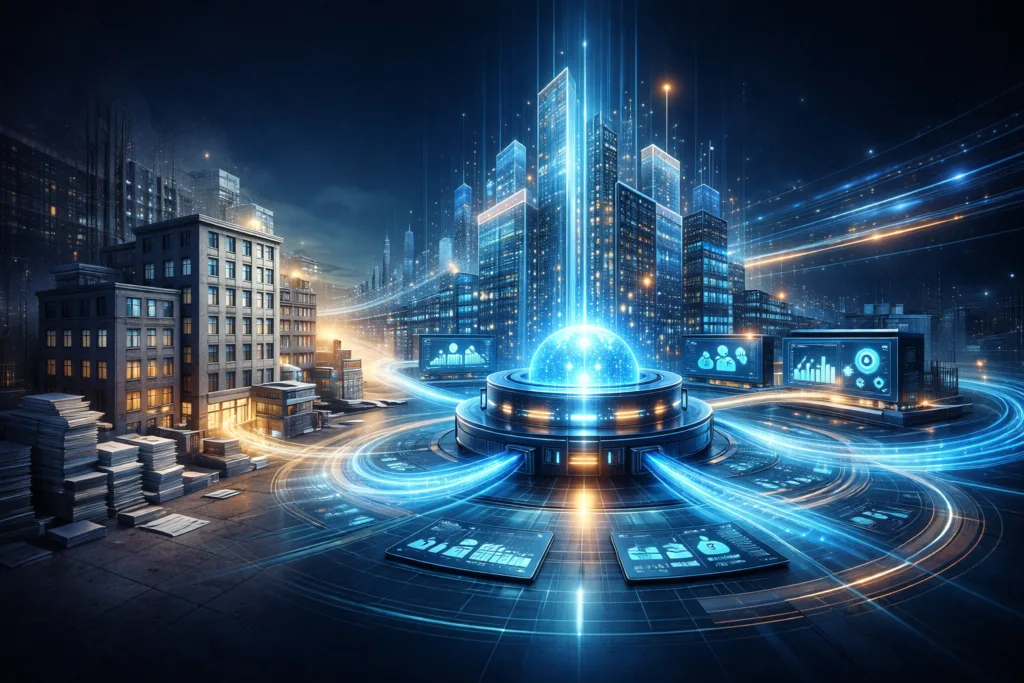

In a world where technology is advancing at an unprecedented pace, modern enterprise systems have become a crucial component of business growth and development. Companies can no longer rely on outdated or fragmented systems; the need for a modern, scalable, and integrated enterprise system is essential for ensuring continuity, improving performance, and enhancing competitiveness.
Modern enterprise systems focus on process integration, providing a unified view of operations, and improving the user experience internally and externally. They form the core infrastructure that supports business operations in the digital age.
This comprehensive article explains the concept of modern enterprise systems, their characteristics, benefits, and how to choose the right system for the future of business in 2025 and beyond.
What Are Modern Enterprise Systems?
Modern Enterprise Systems are integrated technological solutions designed to manage business operations intelligently, flexibly, and efficiently. They include all major departments within an organization, such as:
Finance
Human resources
Operations
Supply chain
Sales
Inventory
Customer service
Projects
These systems rely on the latest technologies, including:
Cloud services
Artificial intelligence
Data analytics
API-based integrations
Advanced security
Modern UX/UI interfaces
Key Characteristics of Modern Enterprise Systems
1. Full Integration Across Departments
All modules of the organization operate within a unified platform, eliminating duplication and preventing errors.
2. High Flexibility
New modules can be added, workflows modified, or the system expanded without rebuilding from scratch.
3. Cloud Accessibility
Employees can work remotely, support branches, and manage operations from anywhere.
4. Advanced User Interfaces
Modern, clean, and easy-to-use designs increase productivity and reduce mistakes.
5. Workflow Automation
The system performs many tasks automatically, such as:
Sending notifications
Routing requests between departments
Generating tasks
Creating ready-made reports
6. Advanced Security
Including:
Encryption
Backups
Activity monitoring
Detailed permission control
7. AI-Powered Capabilities
Such as:
Predictions
Advanced analytics
Data insights
Decision support
Benefits of Modern Enterprise Systems
1. Improved Operational Efficiency
Every process becomes faster and more accurate.
2. Increased Productivity
Employees complete tasks without lengthy manual workflows or paperwork.
3. Reduced Costs
Through:
Fewer errors
Less duplication
Reduced manual effort
Lower operational waste
4. Unified Business Visibility
Dashboards that display:
Company performance
Sales activities
Inventory movement
Expenses
Project progress
5. Enhanced Customer Experience
Thanks to:
Faster responses
Accurate information
Ability to track requests
6. Better Decision-Making
Powered by advanced analytics, BI, and AI tools.
Core Components of Modern Enterprise Systems
1. Centralized Database
Ensures consistent and accurate data across the entire organization.
2. Integrated Modules
Such as:
Finance
HR
Inventory
Sales
3. Workflow Engine
Manages internal processes and approval flows.
4. API Interfaces
To integrate with:
Government systems
Payment gateways
External software
5. Reports and Analytics
Dashboards, KPIs, BI insights.
6. Security Layer
Authentication, authorization, activity logs.
How to Choose the Right Modern Enterprise System
1. Define Your Needs
Understand your operations and identify what needs improvement.
2. Choose a Scalable System
It should grow with your company.
3. Ensure Built-in Workflow
A system without workflow is guaranteed to fail.
4. Strong Support & Training
The vendor must provide real support — not just software delivery.
5. Seamless Integration
Your system must connect with external tools without friction.
6. User-Friendly Interface
Complex systems slow businesses down and discourage adoption.
Examples of Modern Enterprise Systems
ERP Systems
HRMS Systems
Project Management Platforms
CRM Systems
Real Estate Management Systems
Data Analytics Platforms
Cloud Enterprise Solutions
The Role of Modern Enterprise Systems in Digital Transformation
These systems form the foundation of digital transformation because they:
Unify business processes
Improve decision-making
Provide a digital operating environment
Enable rapid scaling
Automate repetitive tasks
Improve work quality
Companies that adopt modern enterprise systems become more:
Competitive
Flexible
Future-ready
Conclusion
Modern enterprise systems are no longer optional they are a strategic necessity for any company seeking to:
Organize its operations
Improve efficiency
Increase productivity
Support digital transformation
Enhance customer experience
Protect data
Accelerate business growth
Companies that invest in modern enterprise systems secure their position in the market, while those that delay will face major competitive challenges.